


If you work with your hands for a living, your body is your business. And it takes a beating. The Australian Physiotherapy Association reports that 68% of tradies most commonly feel pain or discomfort in their back, neck or shoulders, yet only about 1 in 10 see a physio to prevent an injury before it happens. Most blokes and women on the tools just push through it, until the day they can’t.
This is a physio’s honest take on the injuries that take tradies off the job, what actually helps, and how WorkCover physio works if you’ve already done something. The goal isn’t to wrap you in cotton wool. It’s to keep you working, and to keep you working in ten and twenty years, not just this week.
The injuries that take tradies off the tools
Work injuries are one of the biggest causes of time off in the country. Safe Work Australia recorded around 146,700 serious workers compensation claims in 2023 to 2024, the kind that cost at least a week of work, and a big share of those are bodies simply wearing out or giving way under load.
For tradies, the usual suspects are:
- Lower backs, from lifting, twisting and bending all day
- Shoulders, from overhead work, drilling and lugging materials
- Necks, from looking up, looking down, and holding awkward positions
- Wrists, elbows and forearms, from repetitive tool use and vibration
- Knees, from kneeling, squatting and climbing
Some of these arrive in one moment, a lift gone wrong. Most build up quietly over months until a normal movement tips them over the edge.
Backs and lifting: it’s not just your technique
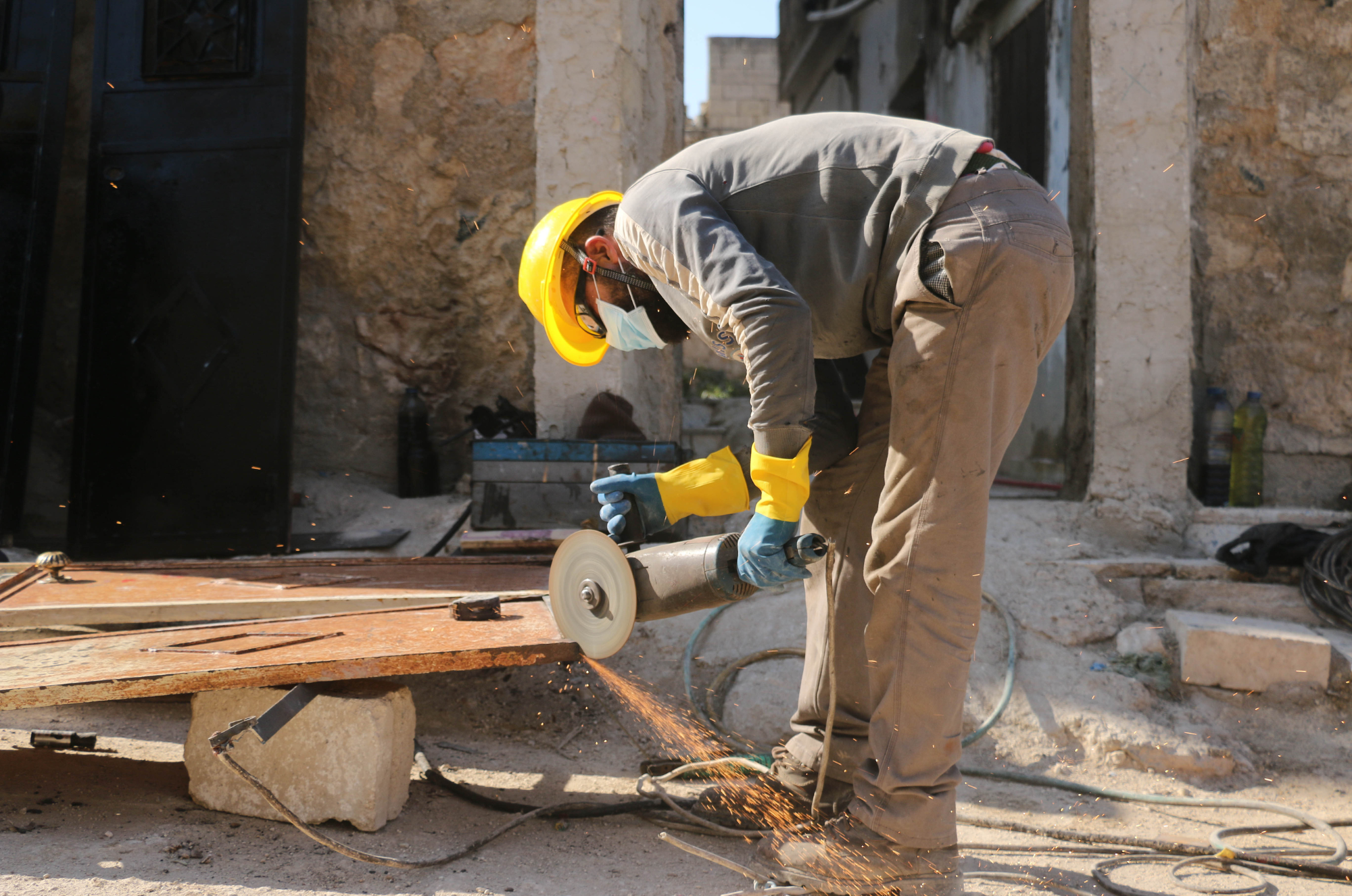
Everyone gets told to “lift with your legs, not your back,” and it’s decent advice. Keep the load close, hips and knees bent, avoid twisting under weight. But here’s the honest part most posters on the smoko room wall leave out: lifting technique is only part of the story.
A back injury usually isn’t one bad lift. It’s the twentieth heavy lift at the end of a long day when you’re fatigued, dehydrated and rushing. It’s doing the same movement a thousand times with no variation. It’s a body that isn’t conditioned for the load being asked of it. Good technique helps, but so does managing fatigue, rotating tasks, and building enough strength that the work isn’t at your limit.
Occupational overuse syndrome (the slow burn)
Occupational overuse syndrome, sometimes called RSI, is what happens when the same task, grip or position gets repeated so often that the tissue doesn’t get a chance to recover. Think trigger tools, rendering, tiling, screwing off, anything with vibration or a sustained grip. It tends to show up in the wrists, elbows, forearms and shoulders.
The warning signs are easy to ignore: an ache that lingers after work, a grip that tires quickly, pins and needles, a spot that’s stiff first thing in the morning. Caught early, overuse injuries usually settle with some load management, technique tweaks and targeted strengthening. Left to run, they turn into the thing that stops you gripping a drill at all.
Why “pushing through it” costs you
Tradies are tough, and pushing through is a point of pride. The problem is that pain is information. A niggle that keeps coming back is your body telling you something upstream needs attention, and ignoring it usually means a bigger, longer lay-off later.
The APA’s own numbers back this in: only around 1 in 10 tradies see a physio for prevention, but roughly two-thirds of those who did see one reported significant pain reduction. Early is cheap. Late is a claim, time off, and a body that never quite comes back to 100%.
How WorkCover physio works if you’ve already done something

If you’ve hurt yourself at work, physiotherapy is usually covered under a workers compensation claim, so cost shouldn’t be the reason you sit on it. You generally report the injury to your employer, and treatment gets arranged from there. You don’t need a doctor’s referral to see a physio privately, and we treat plenty of work injuries both privately and through WorkCover.
The main thing is not to wait. The sooner an injury is assessed, the sooner you get a clear diagnosis and a plan to get back on the tools, and the less likely a short problem turns into a long one.
Simple things that actually help on site
- Warm up for two minutes before heavy work. Your body’s an engine, not a light switch.
- Rotate tasks where you can, so the same tissue isn’t loaded all day.
- Take micro-breaks on repetitive jobs, even 30 seconds resets a lot.
- Stay hydrated and don’t leave the heaviest lifts for when you’re cooked.
- Build some strength outside work. A stronger body has more headroom before the work becomes an injury.
When to see a physio
Book an assessment if you’ve got:
- Pain that isn’t settling after a week or two
- The same niggle that keeps coming back
- Pins and needles, numbness or weakness
- Pain that wakes you at night
- Anything that’s changing how you work or move

Frequently asked questions
Can I claim physio on WorkCover? Usually yes. Physiotherapy is generally covered under an accepted workers compensation claim. Report the injury to your employer, and ask us and we’ll help you understand the process.
Do I need a doctor’s referral to see a physio? No, you can book directly. For some claims or programs a referral or medical certificate may be needed, and we can guide you.
What is occupational overuse syndrome? It’s injury from repeated tasks, grips or positions that don’t get enough recovery, common in the wrists, elbows, forearms and shoulders. Caught early it usually settles well.
How do I stop hurting my back lifting? Good technique matters (load close, hips and knees bent, no twisting), but managing fatigue, varying your tasks and building strength matter just as much.
Should I push through the pain? A one-off bit of soreness, maybe. A niggle that keeps returning, no. That’s the point to get it looked at, before it becomes time off.
The bottom line
Your body is the most important tool you own, and it’s the one you can’t replace. If something’s been niggling, get it assessed before it becomes a claim. If you’re a tradie anywhere around Coogee, Randwick, Maroubra or the Eastern Beaches, book in with the Coogee Physio team and we’ll get you sorted and keep you on the tools.
Written by Nadine Judelman, physiotherapist and clinic owner, Coogee Physio. This article is general information, not a diagnosis. For advice about your situation, book an assessment or speak with your GP.
References
- Australian Physiotherapy Association, Tradies National Health Month. https://australian.physio/campaigns/tradies-national-health-month
- Safe Work Australia, Key Work Health and Safety Statistics Australia 2025. https://www.safeworkaustralia.gov.au/media-centre/news/key-work-health-and-safety-statistics-australia-2025-now-available
- Healthdirect Australia, Physiotherapy. https://www.healthdirect.gov.au/physiotherapy